
Not all Android TV boxes are created equal — especially for IPTV. Some handle 4K streams effortlessly while others struggle with basic playback. We tested 10+ devices to find the best ones for IPTV and streaming in 2026.
What Is an Android TV Box?
An Android TV box is a small device that connects to your TV via HDMI, turning any display into a smart streaming hub. Unlike built-in Smart TV operating systems, these devices offer faster processors, more app choices including IPTV apps, and regular updates.
Android TV vs Google TV vs Fire TV OS
| Feature | Android TV | Google TV | Fire TV OS |
|---|---|---|---|
| Interface | App grid | Content-first | Amazon-focused |
| App Store | Play Store | Play Store | Amazon Appstore |
| IPTV apps | All available | All available | Limited (sideload) |
| Sideloading | Easy | Easy | Possible |
| Updates | Manufacturer | Manufacturer | Amazon |
Best Android TV Boxes for IPTV
Nvidia Shield TV Pro
Best overall. Most powerful Android TV box. AI upscaling, Plex server, Dolby Vision, all IPTV apps supported.
- Nvidia Tegra X1+ processor
- 3GB RAM / 16GB storage
- AI upscaling to 4K
- Dolby Vision, HDR10, Atmos
- Works as Plex media server
Formuler Z11 Pro Max
Best dedicated IPTV box. MYTVOnline2 app with the best IPTV experience. Built-in portal support, EPG, recording.
- MYTVOnline2 — best IPTV app
- 4K HDR support
- Built-in EPG and recording
- Dedicated remote with IPTV shortcuts
Chromecast with Google TV
Best budget. Google TV interface, 4K HDR, works with all IPTV apps. Amazing value for the price.
Xiaomi Mi Box S
Best value. Google TV certified, 4K HDR, Chromecast built-in. Excellent price-to-performance.
Best Android TV Boxes by Use Case
| Use Case | Best Device | Why |
|---|---|---|
| IPTV | Formuler Z11 Pro Max | MYTVOnline2 is the best IPTV experience |
| Streaming | Chromecast with Google TV | Best interface, all services, $49 |
| Gaming | Nvidia Shield TV Pro | GameStream, powerful GPU |
| Plex / Media Server | Nvidia Shield TV Pro | Runs Plex Media Server locally |
| Budget | Xiaomi Mi Box S | Best value at $59 |
Specs Comparison
| Device | CPU | RAM | Storage | 4K HDR | WiFi |
|---|---|---|---|---|---|
| Nvidia Shield Pro | Tegra X1+ | 3GB | 16GB | DV, HDR10 | AC |
| Formuler Z11 Pro | Quad-core | 4GB | 32GB | HDR10 | AC |
| Chromecast | Quad-core | 2GB | 8GB | DV, HDR10+ | AC |
| Mi Box S | Quad-core | 2GB | 8GB | HDR10 | AC |
How to Set Up an Android TV Box for IPTV
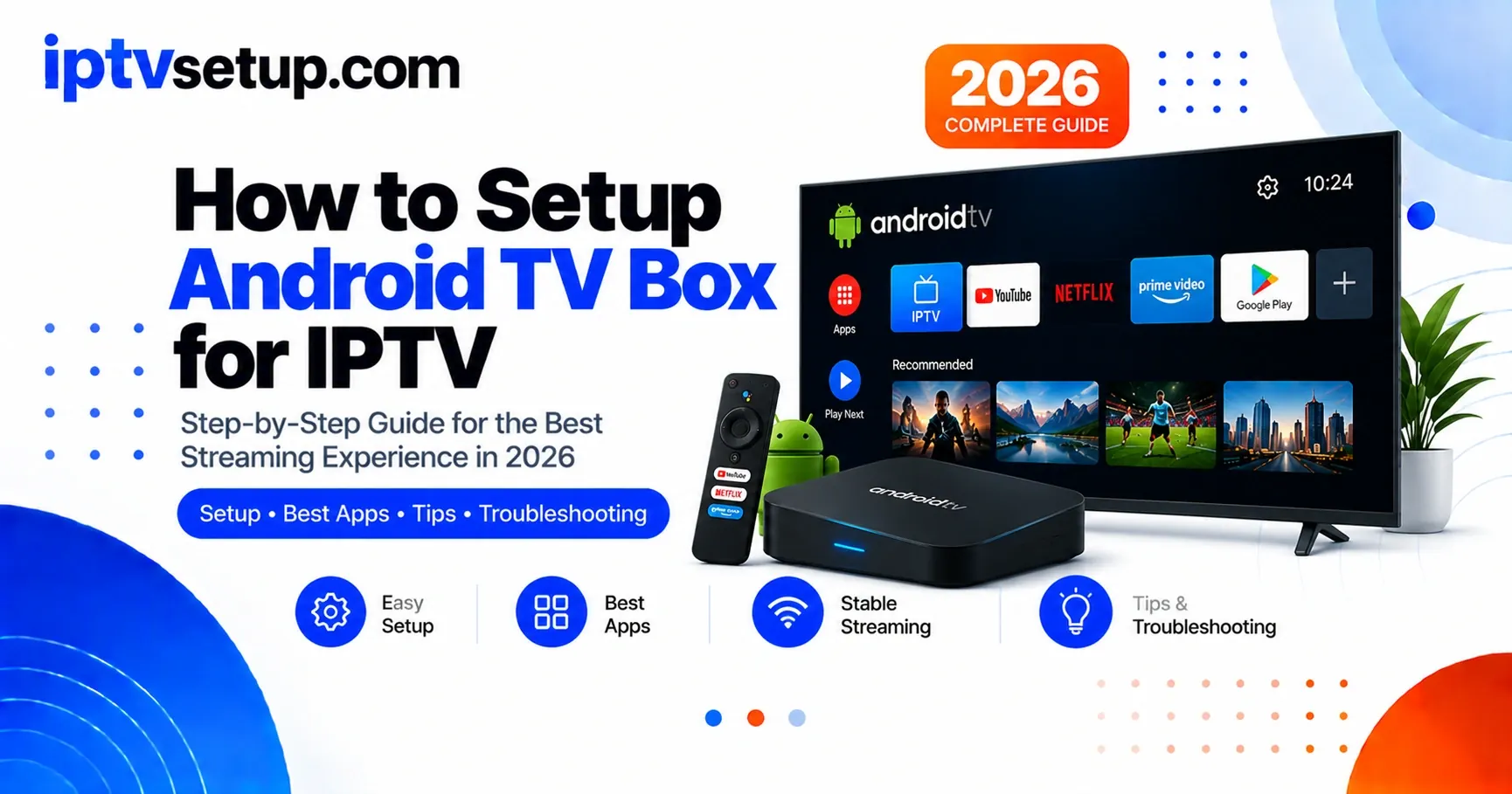
- Connect to WiFi — Use 5GHz if possible for best streaming speed
- Install IPTV apps — Use Play Store for TiviMate, IPTV Smarters, or sideload via Downloader
- Load your playlist — Enter M3U URL or Xtream Codes from your provider
- Configure EPG — Add your provider's EPG URL for TV guide data
- Enable Developer Options — Settings → About → Build 7x for faster animations
Android TV Box Buying Guide
- RAM matters — 2GB minimum for smooth IPTV, 3-4GB recommended
- Netflix certification — Must have Widevine L1 for 4K Netflix/Disney+
- WiFi 6 vs Ethernet — Ethernet is more stable for IPTV
- DRM support — Verify Widevine L1 for streaming service compatibility
How to Choose the Right Android TV Box Model
After testing over a dozen Android TV boxes, I've learned that picking the right one comes down to matching the hardware to what you actually do with it. If you're mainly using IPTV with services like TiviMate or IPTV Smarters, you don't need the most expensive box on the market — but you do need enough RAM and a decent processor to handle 4K streams without stuttering. I've made the mistake of buying a cheap $30 box from a no-name brand, and within a month the interface was lagging and streams were constantly buffering. Don't make that same mistake.
Here's what I look at when choosing a model. First, the chipset — boxes running the Amlogic S905X4 or S928X series handle 4K HDR playback smoothly, while older S905X3 chips can struggle with high-bitrate streams. Second, RAM is non-negotiable: 2GB is the bare minimum for IPTV, but I strongly recommend 4GB if you plan to multitask or run a Plex server. Third, check for Widevine L1 certification if you watch Netflix, Disney+, or Amazon Prime in 4K — without it, those services cap out at 480p or 540p. I learned this the hard way with a Mi Box S that had L3 certification on certain firmware versions, and I was stuck watching my favorite shows in standard definition.
For performance, a few tweaks make a big difference. I always go into Developer Options and speed up the window animation, transition animation, and animator duration scales from 1x to 0.5x — it makes the interface feel snappier immediately. Using a wired Ethernet connection instead of WiFi cuts down on buffering during IPTV streams, especially if you're watching 4K content. If Ethernet isn't possible, make sure you're on 5GHz WiFi rather than 2.4GHz. I also clear the cache on my IPTV apps every few weeks using the Settings menu, which prevents the app from slowing down over time. These small habits have kept my Nvidia Shield running smoothly for over two years without a factory reset.
Android TV Box Maintenance and Longevity Tips
I've been using Android TV boxes for years, and the biggest lesson I've learned is that a little maintenance goes a long way. After a few months of heavy IPTV use, the cache builds up and the interface starts to feel sluggish. I clear the cache on my IPTV apps every couple of weeks — just go to Settings > Apps > pick the app > Clear Cache. It takes ten seconds and makes a noticeable difference in how quickly channels load and the EPG populates. I also uninstall apps I don't use regularly. These boxes usually have limited storage between 8 and 16GB, and filling them up with apps you never open slows down the whole system. The same goes for any screensavers or live wallpapers — turn those off in Settings > Display & Sound > Daydream to free up background resources.
Keeping your box on the latest firmware is another easy win. Manufacturers push updates that fix bugs and improve performance, but you sometimes have to check manually. On the Nvidia Shield, go to Settings > Device Preferences > About > System Update. On cheaper boxes like the Xiaomi Mi Box S, the update process can be buried in different menus, but it's worth hunting for. If your box still feels slow despite regular maintenance, a factory reset once a year brings it back to like-new performance. Just make sure you save your IPTV playlist URLs, EPG sources, and login details first. I keep a notes file on my phone with all of that information — losing those credentials and having to contact my IPTV provider is a headache I've dealt with more times than I'd like to admit.
Frequently Asked Questions
What is the best device for IPTV?
Nvidia Shield TV Pro for power, Formuler Z11 Pro Max for dedicated IPTV use.
What's the difference between Android TV and Google TV?
Google TV is the new interface on top of Android TV — same OS, better content-focused UI.
How do I install IPTV apps on my device?
Use the Play Store for most apps. For apps not in the store, use the Downloader app to sideload APKs.